January 2027 • Haridwar • Uttarakhand

The Eternal Call of
Haridwar Kumbh

A confluence of faith, culture and humanity, where the nectar of immortality is remembered in the sacred flow of the Ganga.

170Days Remaining
Opening Bathing DateMakar SankrantiThursday, 14 January 2027
Significance

Beyond a festival: the spiritual pulse of Bharat.

The Haridwar Kumbh is not merely a gathering. It is the physical form of a collective spiritual aspiration held for millennia. When the sun and Jupiter align in the appointed houses, the Kumbh returns to Haridwar, one of the four earthly sites where a drop of the amrit is said to have fallen.

Haridwar, the Gateway of Hari, becomes the centre of the world for millions of pilgrims who come to touch Mother Ganga at the moment the mountains hand her to the plains.

From the ancient Akharas of the Naga sadhus to the silent prayers of householders, every rite here — the Aarti at Har Ki Pauri, the Deep Daan, the Kalpavas — is a thread in a fabric that goes back to the earliest layers of Indian memory.

Kumbh at Haridwar is a Kumbh in its own right, in its own sovereign cycle.
A Living Tradition

The Kumbh at Haridwar has been recorded since at least the seventh century, when the Chinese pilgrim Xuanzang described a great fair on the Ganga. The Akhara system, the Peshwai processions, and the astrological reckoning of dates have all continued in unbroken succession.

The River Itself

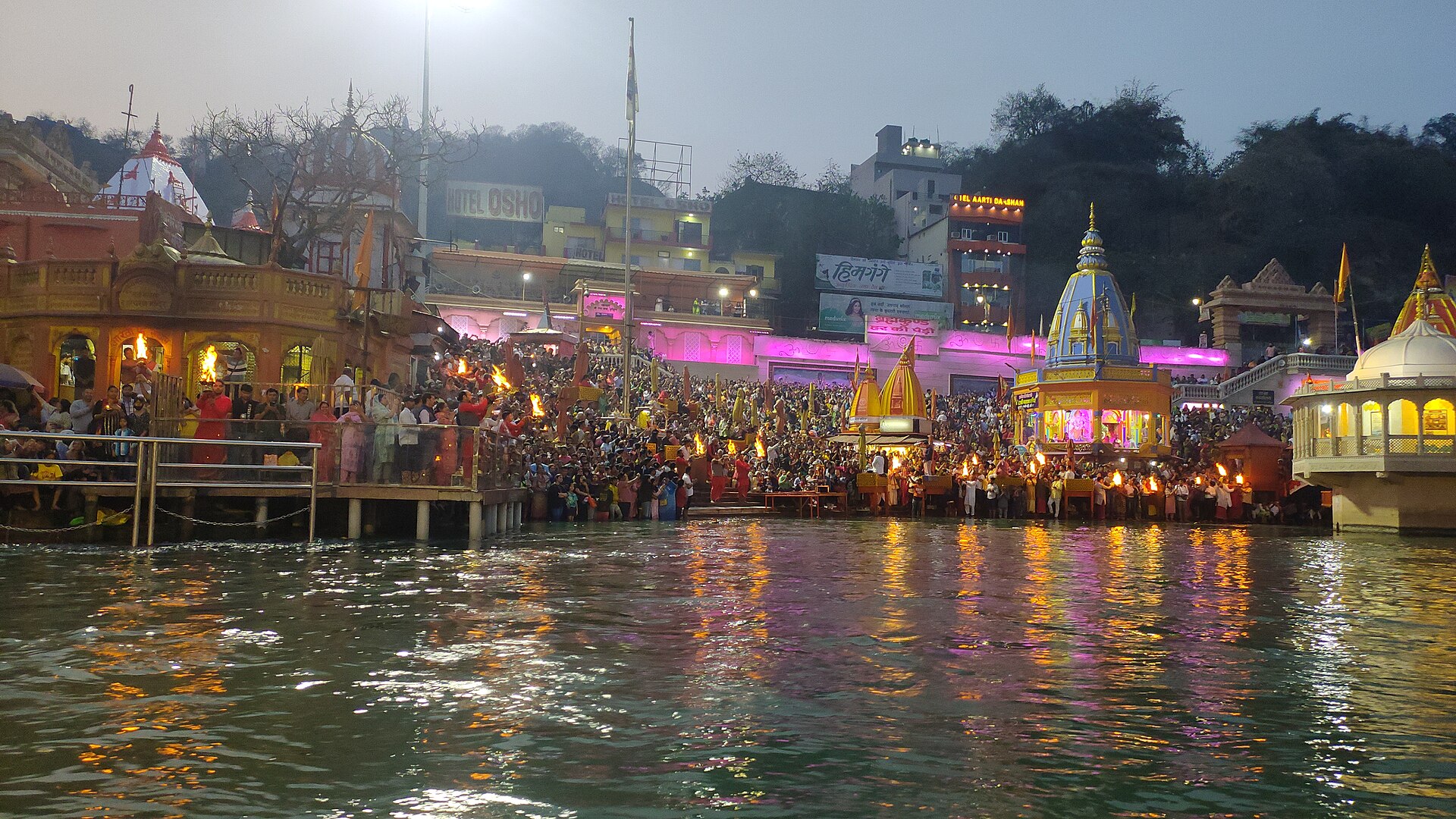
At Har Ki Pauri, the Ganga is drawn into the stone Brahmakund. This is the point every pilgrim seeks — the ghat where the amrit is said to have touched the earth.

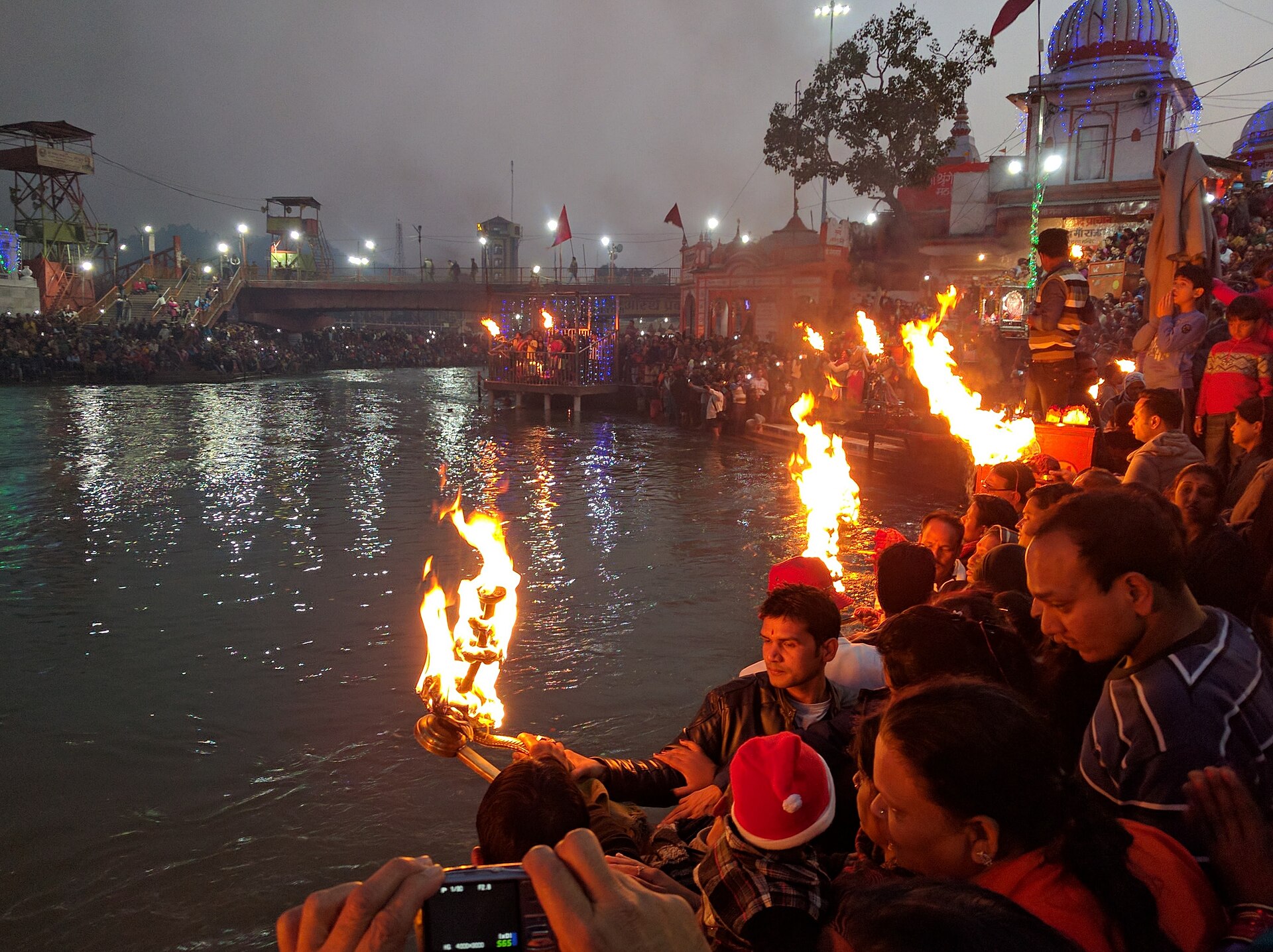
Priest performing Ganga Aarti with a large brass flame at Har Ki Pauri

Evening Aarti at Har Ki Pauri, daily at dusk.

Rituals of the Ghats

The rites that make the Kumbh a Kumbh.

Snan

The sacred immersion at Brahmakund, believed to wash lifetimes of karma in the winter flow of the Ganga.

Ganga Aarti

At dusk, brass lamps ignite the ghats. The river reflects a thousand flames as bells and mantras rise into the evening.

Kalpavas

A month of austerity beside the Ganga. One meal a day, prayer and discourse. The traditional path of the seeker at Kumbh.

Peshwai & Akharas

The ceremonial entry of the thirteen Akharas, with elephants, chariots and Naga sadhus.

Deep Daan

Offering lit diyas to the Ganga at nightfall, turning the ghats into a river of stars.

Satsang & Katha

Discourses and Vedic recitations at the tents and akhara camps, from before dawn until late into the night.

Beyond the Ghats

Temples & cultural exploration.

Haridwar is not one place but many. Between snans, walk the older lanes: the Shakti Peethas, the yagna sites of the Puranas, and the ashrams of the modern renaissance.

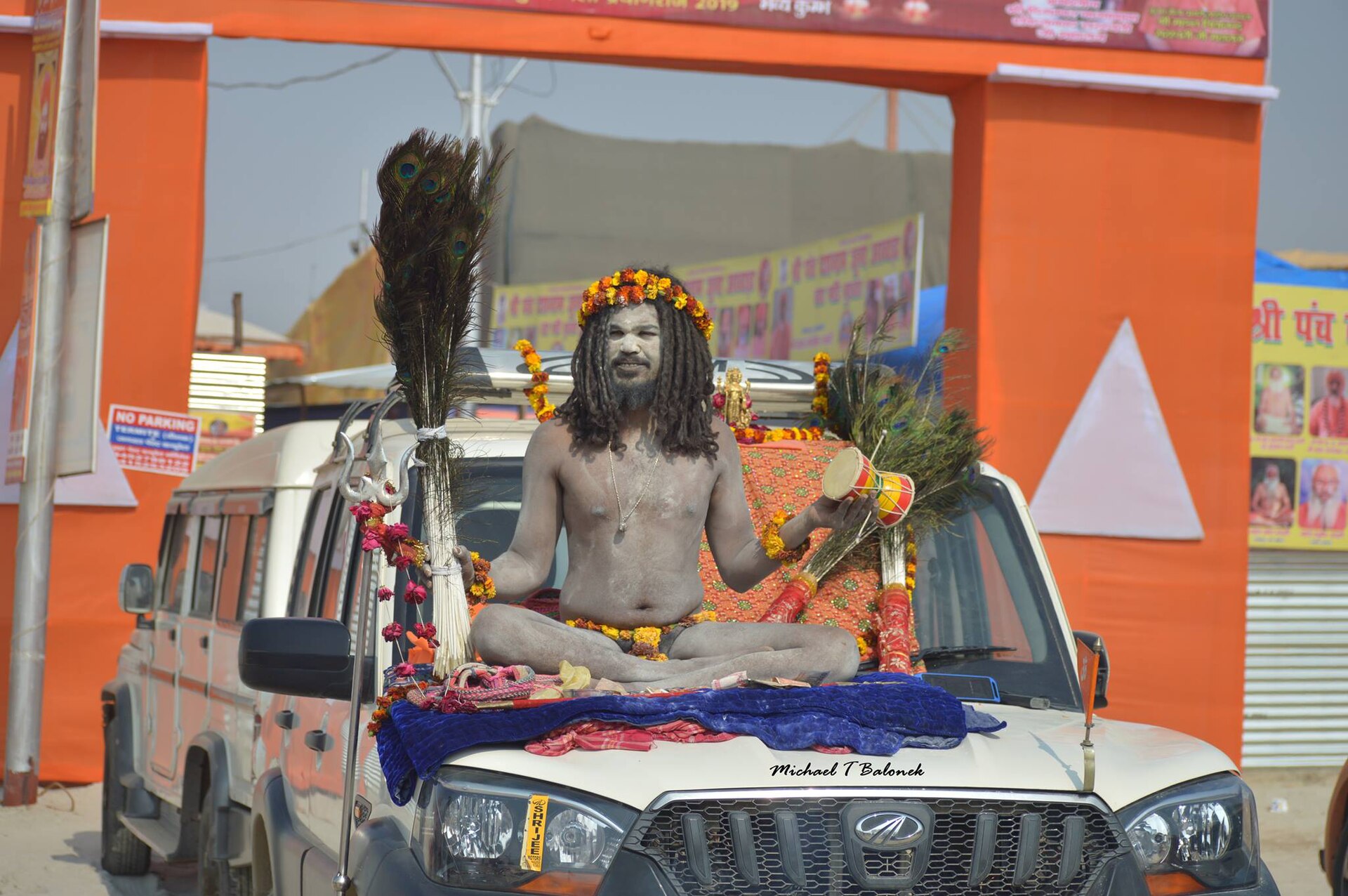
Sadhu in ochre robes at the Kumbh mela

Har Ki Pauri

The principal ghat and footprint of Vishnu at the Brahmakund.

Mansa Devi

Hilltop shrine of the wish-fulfilling goddess, reached by ropeway.

Chandi Devi

Across the Ganga on Neel Parvat, one of the Siddha Peethas.

Maya Devi

The Shakti Peetha that gave Haridwar its ancient name, Mayapuri.

Daksha Mahadev

In Kankhal, the site of Sati's self-immolation in the yagna of Daksha.

Bharat Mata Mandir

A modern eight-storey shrine to Mother India and her saints.

Evening Aarti

Har Ki Pauri, dusk daily. Arrive by 5:30 pm for a step near the water.

Rishikesh Day-Trip

25 km upriver: Lakshman Jhula, Beatles Ashram, Triveni Ghat.

Ganga Canal Walk

The colonial-era headworks and the quieter parallel ghats.

Brass diyas glowing on the stone steps of Haridwar ghats
Deep Daan

A river carrying a thousand small lights.

At dusk, pilgrims release lit diyas into the Ganga. From the far bank the river appears to hold constellations of its own. It is the simplest and most photographed act of the mela, and among the oldest.

For Brands & CSR

A moment of seva at India's largest gathering.

The Haridwar Kumbh is one of the largest peaceful gatherings on earth. This site is an interest desk for brands and CSR wings that would like to build facilities or run public-service work at the mela. We would love to hear from you.

Scale of Reach

Haridwar is expected to draw crores of pilgrims and India's largest cultural media audience in 2027.

Goodwill, Not Interruption

At the Kumbh, seva is the medium. Facilities that ease a pilgrim's journey earn a kind of brand memory advertising cannot buy.

Meaningful CSR Impact

Public utility work at a gathering this large produces measurable social impact for your CSR reporting mandates.

Cultural Alignment

Association with the world's oldest continuous religious gathering, in the country's most sacred geography.

Ways to Contribute

Formats brands typically consider.

Hydration Seva

Water stations, ORS points and shaded cool zones along the ghat corridors and Akhara routes.

Sanitation & Safety

Toilet blocks, waste management, hand-wash points and safety signage across the mela ground.

Anna Seva & Prasad

Meal seva, prasad distribution and fasting-friendly food, delivered respectfully at scale.

Medical & Rahat Kendras

First-aid booths, foot-relief points, senior-citizen and divyang seva zones.

Cultural Storytelling

Reels, vlogs, devotee stories and short docs documenting the seva your brand enables.

Wayfinding & Utility

Signage, welcome arches, charging points and information kiosks placed with reverence.

Reach Out

Share a few details and we'll get in touch.

Or write to contact@chaaipani.com / aditi@chaaipani.com